Grandparents’ Rights
Navigating Contact and Care for Children for Grandparents and Other Relatives
Let’s start this blog post with the unpalatable truth: grandparents do not have ‘rights’ in England & Wales. And whilst this article is titled ‘grandparents’ it actually refers to any other relative, or person who has had regular contact with a child, seeking to have ongoing contact or re-establishing contact with children in their lives.
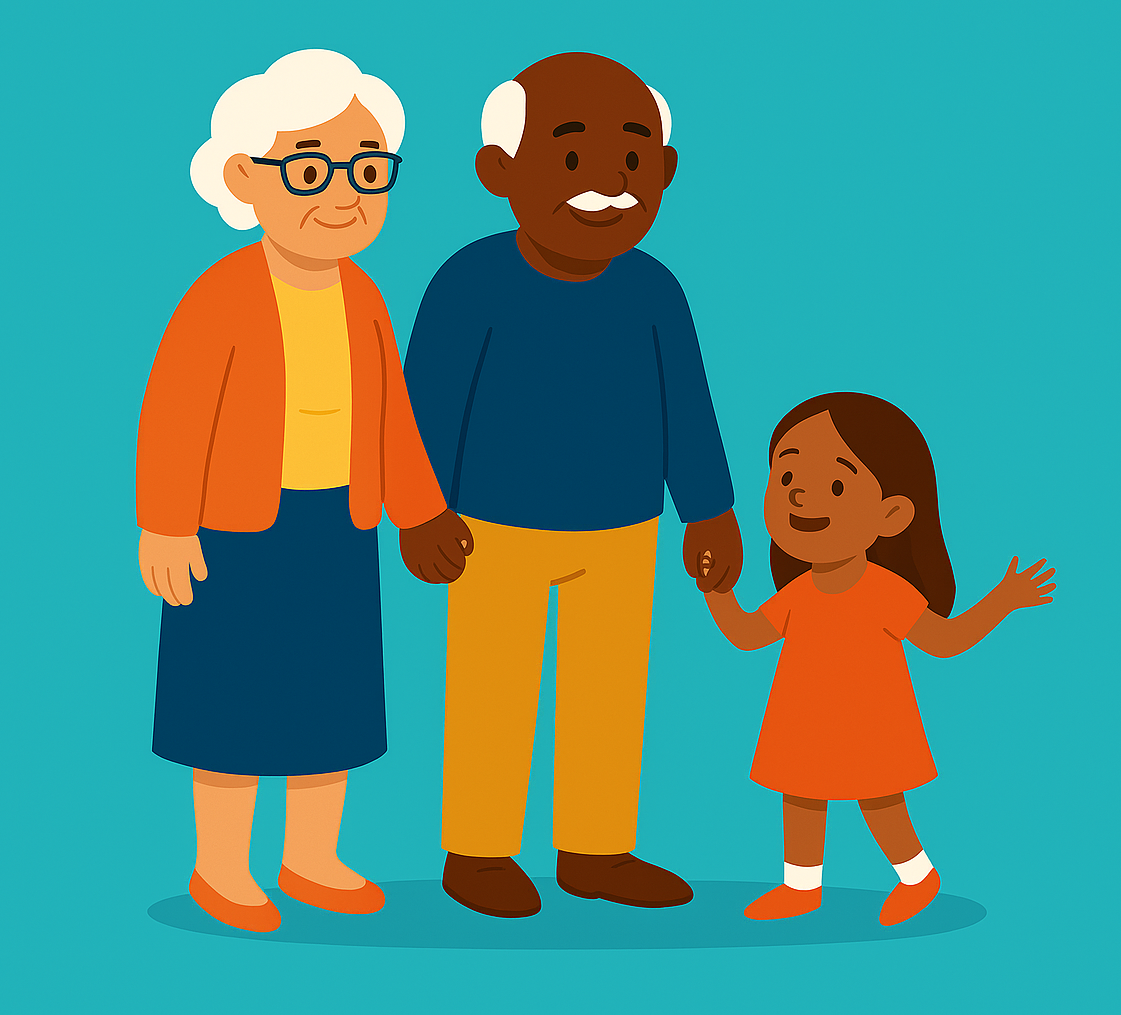
Grandparents, and other relatives, often play extremely important roles in the lives of children; offering emotional support, stability, and continuity, especially during family breakdowns. But they have no automatic legal standing for those children.
This is difficult, because if the parents – or anyone else with parental responsibility – decide the grandparents or other relatives cannot see the children, there is no automatic right to apply to court. Under the Children Act 1989 anyone without parental responsibility must seek permission from the court before applying for a Child Arrangements Order.
A MIAM, mediation information and assessment meeting must be completed unless there is an exemption (e.g. abuse).
Mediation is often the simplest, and cheapest, route, to resolve issues amicably. However, if that doesn’t work, then the grandparent (or other relative) will need to seek the permission of the court to apply for a child arrangements order. There are therefore two applications the grandparents make, 1) leave to apply, and 2) for the actual child arrangements.
If granted leave to make the substantive application, grandparents/other relatives can apply for a child arrangements order to determine contact with the child and how the contact is maintained, e.g. calls, letters, visits. Ultimately the court’s paramount concern is the child’s welfare.
It’s important that grandparents and other relatives can show their involvement in the children’s life and provide evidence of emotional and developmental benefits of the children having contact with them. The Welfare Checklist should guide them.
The court can refuse contact where there is evidence of a risk of emotional or physical harm, or if the grandparent/relative’s involvement would destabilise the child’s environment, and where the relationship is deemed not to be in the child’s best interests. These are complex decisions, and the court makes them with the child’s best interests as paramount.
Grandparents and other relatives are often involved with the younger people in their families, and in most cases it will be important for those relationships to continue, even when parents separate and no longer want to have contact with their former partner/spouse’s relatives. The children are, after all, a part of two families, not just one. But there are those instances where grandparents/relatives are not going to enhance a child’s life, and the law exists to determine which side of the line those people fall on.
Grandparents, and often other relatives, can be the unsung heroes of family life, and whilst the law in England & Wales does not grant them automatic rights, it does provide a pathway, albeit a complex one, for applying for a legal order. With very careful, professional and knowledgeable legal guidance and preparation, it is possible to maintain meaningful relationships with younger people in the family for whom you have no parental responsibility.